
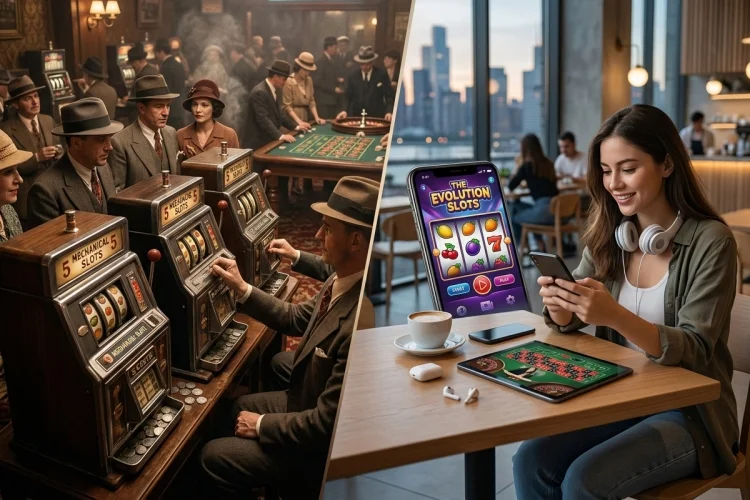
How Casino Games Have Evolved Through Live Dealers and Digital Tech
Casino innovation used to mean introducing a new table variation or building a more impressive slot cabinet.
Today, developers can mix real dealers, digital interfaces, Random Number Generators, augmented reality, multi-camera streaming, and interactive bonus games inside one product.
That shift helps explain How Casino Games Have Evolved from relatively simple digital copies into a much broader form of interactive entertainment.
Modern technology has not only changed where casino games are available. It has also changed their speed, visual design, audience size, and the kinds of mechanics developers can create.
Online Casinos First Recreated Familiar Games
Early digital casino design had an obvious challenge: convince players that familiar games could work without physical casino equipment in front of them.
The early commercial Web developed rapidly during the 1990s. The Computer History Museum notes that gambling websites were among the first types of businesses generating substantial online revenue by around 1995.
Early games naturally borrowed heavily from physical casinos.
Digital roulette still looked like roulette. Blackjack showed virtual cards and a dealer area. Online slots imitated reels even though there was no longer a mechanical reason to use them.
This approach made new technology easier to understand.
Instead of teaching an entirely new game, developers changed the delivery method while preserving familiar rules.
RNG Allowed Games to Move Beyond Physical Limits
Random Number Generator technology helped casino software become more independent from physical equipment.
A digital result no longer needed a physical reel to stop or a dealer to draw a card. Software could generate outcomes according to the mathematical rules of the game and display the result through graphics.
That flexibility transformed game design.
Slots could add dozens of paylines, unusual reel configurations, animated features, cascading symbols, random modifiers, and complicated bonus rounds.
RNG products also became subject to technical regulation in licensed markets. Great Britain’s current Remote Gambling and Software Technical Standards set requirements for remote gambling software offered by licensed operators.
This regulatory layer became increasingly important as the games themselves became more technically complecated.
Live Casino Reconnected Digital Gaming With Real People
RNG solved many technical problems, but it could not fully reproduce the atmosphere of watching a dealer shuffle cards or seeing a real roulette wheel spin.
Streaming technology created another direction.
Evolution launched its first live casino operation from Riga in 2006. The early studio had only a handful of tables, basic cameras, and comparatively limited streaming technology.
Players could watch real casino action through their computers rather than relying entirely on digital animation. The concept grew alongside broadband internet.
By 2016, Evolution reported more than 150 live tables and more than 2,000 employees after beginning with a small studio ten years earlier.
Modern live casino studios now use professional lighting, several camera angles, dedicated hosts, detailed interfaces, and much higher-quality streams.
The underlying blackjack or baccarat rules may be old, but the production resembles broadcasting.
Smartphones Changed the Design Philosophy
Desktop online casinos could use wide interfaces filled with menus, statistics, and betting controls.
Phones changed that.
Evolution began extending its live product onto tablets in 2012, bringing games such as Live Roulette to the iPad and planning mobile versions of blackjack and baccarat soon after.
As smartphones became the primary internet device for many people, developers had to design games around touch controls and smaller displays.
Menus became more compact. Bet buttons became larger. Game histories, rules, live video, and betting areas had to share limited screen space.
This affected slots too.
Instead of creating a desktop game and shrinking it later, many modern titles are designed to feel natural on mobile from the beginning.
That is a major shift from the old casino model, where the hardware dictated the size of the game.
Live Tables Learned to Scale Beyond Physical Seats
A physical blackjack table has an obvious limitation: only so many chairs fit around it.
Online technology does not have the same problem.
Modern live casino systems can allow large numbers of people to participate in a single streamed game while software manages individual wagers. Other formats can give players shared starting conditions before letting each participant make seperate decisions.
The UK Gambling Commission’s definition of remote gambling reflects this broader technological model, covering gambling through the internet, phones, television, radio, and other electronic communication systems.
The table no longer needs to be a physical place that every participant can touch.
It can instead function as a live event delivered simultaneously to screens in many locations.
That change is especially important because it shows how digital technology did more than recreate casinos – it removed some of their physical constraints.
Game Shows Blurred the Line Between Casino and Entertainment
One of the biggest modern changes has been the rise of live casino game shows.
Evolution’s Dream Catcher launched in 2017 as a large money-wheel game and helped establish the provider’s live game-show category.
Crazy Time pushed the idea further in 2020.
Its format combines a physical money wheel with multiple bonus games, RNG-generated multipliers, augmented reality, and design ideas borrowed from slot games and video games.
This is very diffrent from simply streaming a traditional blackjack table.
The studio itself becomes part television set, part casino floor, and part interactive digital interface.
Today’s live game-show category demonstrates how far casino design has moved from merely digitizing old games. Developers can now create experiences that would be difficult to classify as purely slot, table game, or television show.
Technology Also Changed What Players Can See
Older casino players had access to what was physically displayed around them.
Digital interfaces can present far more information.
Modern games may show previous results, payout tables, live statistics, betting histories, countdown timers, side-bet explanations, and animated indicators. Players can often open complete game rules without leaving the table.
Live casino broadcasts can also switch between multiple cameras.
A roulette stream might move from a wide studio shot to a close view of the wheel. Game shows can combine real presenters with augmented-reality graphics that appear directly inside the broadcast.
This does not change probability by itself, but it changes how information and entertainment are presented.
Casino games increasingly compete not just through rules but through user-interface design and production quality.
The Modern Casino Is Becoming a Hybrid Platform
One of the clearest trends is that boundaries between game categories are becoming less rigid.
Evolution now describes its portfolio as including traditional live casino, live game shows, RNG First Person table games, and slots. Its First Person products, for example, use RNG gameplay while visually resembling live environments, with some versions allowing users to switch into a live table.
Meanwhile, game shows combine live hosts with computer-generated multipliers.
Roulette variations can add RNG features. Slots borrow cinematic storytelling. Blackjack variants can introduce multipliers or other modifiers.
The modern casino is therefore less about choosing between “physical” and “digital.”
Those two worlds increasingly overlap.
What Has Not Changed?
Despite decades of technical innovation, the basic appeal of many games remains recognizable.
Cards still create blackjack hands. A roulette result still comes down to a numbered outcome. Slots still resolve wagers through symbol combinations or equivalent game events.
Technology mainly changes access, speed, presentation, and the number of possible features.
This explains why a game invented long before smartphones can still feel comfortable inside a modern mobile interface.
The surface evolves quickly. The foundation changes much more slowly.
Understanding How Casino Games Have Evolved means looking beyond better graphics. The bigger changes came from RNG software, internet distribution, mobile interfaces, live video, scalable tables, and interactive game-show technology.
Modern casino games increasingly combine physical and digital ideas rather than choosing one or the other. Watch how those mechanics interact, and you can see exactly where traditional casino design ends and modern interactive entertainment begins.